
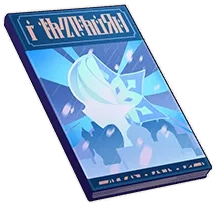
 | Name | A Brief History of the Pale Starborn |
| Type (Ingame) | Quest Item | |
| Family | Book, loc_fam_book_family_1070 | |
| Rarity |  | |
| Description | A book on fae history. Based on certain details within, it’s believed to have been written by fae elders. |
| Table of Content |
| Item Story |
| Obtained From |
| Gallery |
Item Story
| ... In the third year of the 428th Cycle, that is, the 76th year after Emperor Monomakh Snezhnyi raised the imperial capital [127] upon the frozen earth, the Emperor dispatched envoys unto the fiefs of the Vila, and said unto them: "To whom do you offer tribute?" They answered, "Unto King Miscislav [128]." And the imperial emissaries said unto them: "Do so no longer, for they demand unlovely [129] tribute." And the Vila did cease their tithings. The fourth year of the 428th Cycle. The fifth year of the 428th Cycle. In the sixth year of the 428th Cycle, King Miscislav spoke to his people, his kin, and his confederates, accusing the Pale Star court of breaking the standing peace agreement. He demanded that the Emperor pay tribute for ten years — the grain of six hundred granaries and gold to fill thirty storehouses, and sufficient slaves to transport such bounty. This was thirty times the amount that had been demanded of the Vila. The Emperor rejected this ultimatum, and both sides prepared for war [130] thereafter. The Emperor said, "To sacrifice ourselves for the homeland is honorable. Let our comrades in this be our swords and our love. Our enemies proclaim peace, for they wish to stir up war. Should we shamefully give in to them (meaning the Volkodlak), our sons and daughters shall face war greater still. Thus, let us fight bravely for our survival. Let us taste the honeyed wine of victory, or let us make of ourselves a glorious oblation!" In the seventh year of the 428th Cycle, King Miscislav launched an assault upon Kitezh at the head of a great host: The Miscislavli clans marched with him, as did the people of Nyholmgarthir [131], Dalegrad [132], Cirnareka [133], and their numerous servants [134]. Three times the armies clashed at Kitezh, in the foothills, at the frozen lake, and on the plains; the Emperor slew King Miscislav [135] and many princes who followed him. Grand Duke Seriviiki [136] was fortunate to escape with his life, but both Grand Dukes Skoldyryt [137] and Vodyanoy [138] were pierced by the Emperor's spear [139] and slain. In his mercy and love the Emperor sought their bodies out and had them returned to their clans for burial. The Emperor said thus: "They were not kings, nor born of sacred blood [140]. Never were they meant for rulership. Yet, heir to the Pale Star, and protector of all fae am I." Thus did the remaining clans of the fae seek an audience with him, and thus did he gain the authority to govern them. From that day forth, he named himself the Belyi Tsar. [127] Kitezh was the first city in all of Snezhnaya. This imperial capital was built after the custom of the fae ancestors, remaining the center of power over the frozen lands from the fourth year of the 417th Cycle — that is, the year of its founding — until His Majesty the Emperor, in his boundless mercy and grace, pardoned humanity and gave them membership in his realm, moving his seat to Snezhnograd. [128] Miscislav, known in The Volkhov Chronicles as the Blood-Devourer. The great ruler of all Volkodlak, the wise blood-drinker, the master of the Miscislavli alliance. According to the Volkodlak under his command, King Miscislav was a hulking figure, standing out even upon great battlefields like a mighty mountain. As such, he was also known by fae chroniclers as "Gorynishche," or "Son of the Mountain." [129] The term "lovely," as pointed out in the "Theory of Fae Language," can also be translated in our modern context as "beneficial, lovable, or endearing." It should be evident that these words meant rather similar things in those days. The meaning of the Emperor's envoys' words, therefore, should be understood to mean: "Their demand for tributes [from you] is undesirable (or perhaps 'unbeneficial') to you." Some scholars have as such interpreted the envoys' words as a veiled threat. For more relevant information, as well as the precise semantic scope of this term, please refer to the discussion found within the "Theory of Fae Language." [130] Even to the eye of later generations, Miscislavli, the realm established by the wise amongst the Volkodlak, was entirely preposterous in its accusations against the Pale Star's royal court. Yet the accusations were not wholly unreasoned. Or rather, King Miscislav, king of the Volkodlak, whose kingdom bore his name, sought to provoke war for a truer purpose. That is, his fear of the Pale Star court's rise since the previous conflict. Under Emperor Monomakh, the alliance centered around Kitezhgrad developed an entirely new character over the course of the century. It rapidly advanced both in economy and governmental structure. To allow Emperor Monomakh to gain the upper hand in this tug of war was anathema to King Miscislav. Thus began the war that would ultimately shape the destiny of this continent, shrouded in silver snow. [131] The Nyholmgarthir were Volkodlak of bovine aspect. [132] The Dalegrad were a clan of water imps. [133] The Cirnareka were Volkodlak with wolf-like appearances. [134] Primarily military retainers. [135] King Miscislav took personal command in these three large-scale battles against the Emperor. Legend has it that, driven by despair in that final battle, he sought to use the power of the Shadow Realm to delay the advance of the Pale Star court's forces. Though this measure failed to turn the tide, it did have an impact on the Emperor's future decisions. Please refer to "A History of the Snezhnyi Expedition" for detailed records of said three battles. It is worth noting that out on the flank, the Schpekin Legion had received orders from King Miscislav to pursue and prevent imperial forces from uniting. Yet, they were mysteriously misled by the icy fog that day. Misjudging their route of advance, they missed their opportunity to strike and could not prevent the imperial forces from linking up. This ultimately caused the defeat of Miscislav's forces in a head-on clash. This incident has been recorded by a great many historians, but the cause of the sudden shift in the weather remains unknown. King Miscislav was eventually slain when the Emperor's spear pierced through his head. It is said that the bear-shaped skull, large as a chariot, now housed in the Zapolyarny Palace Treasury, still bears the marks left by that spear. [136] Seriviiki, the "Gray Wolf," so The Volkhov Chronicles record. Ruler of Cirnareka. A cunning wolf, known for his agility, said to have engaged in clandestine dealings early in the war with Porfiry, the minister then in charge of the Pale Star's finances. Following the fall of King Miscislav's rule, he was the sole fae Grand Duke to slip immediately and effortlessly into the ranks of the ministers in the Pale Star's royal court. As such, some scholars believe that the failure of the Schpekin Legion under his command to pursue battle at a critical moment was no mere accident, though this hypothesis cannot be considered supported by sufficient evidence. After the war, he was honored by Emperor Monomakh, then already known as the Belyi Tsar, with the ceremonial tap of the long sword on his shoulder. [137] Skoldyryt, known as the Deepwood Bull in The Volkhov Chronicles. Grand Duke of Nyholmgarthir, under Miscislav's command. During the second campaign, he proposed leading an elite vanguard to circle around to the rear of the Pale Star court's forces. He planned to launch a surprise attack and force them into an ambush zone, while the main army would encircle said zone and strike. However, intelligence regarding this strategy was seized by a fae who had infiltrated King Miscislav's army — Filipov, loyal to His Majesty the Emperor and most skilled in transformation techniques. The Emperor adjusted his plans accordingly. Grand Duke Skoldyryt's surprise attack ironically led him to become deeply encircled by the Pale Star's royal army. The Pale Star forces entrapped his, all the while destroying any arriving relief columns, causing King Miscislav's forces to suffer a catastrophic defeat in the second battle. The Grand Duke was then slain in this battle when His Majesty the Emperor's spear pierced his chest. [138] Vodyanoy, given the appellation "The Lackland" by The Volkhov Chronicles. Ruler of Dalegrad, Forebear of All Waterborn in the Frozen Lake. A warrior of unparalleled valor, yet a brute like no other, skilled in launching surprise attacks from beneath the ice. Towards the end of the second campaign, the Grand Duke of the Domovoy, Alvis, lured his legions beyond the Frozen Lake through cunning strategy. Killed when the Emperor's spear pierced his chest. [139] The emperor's spear — Those unfamiliar with the battlefield often question many descriptions in the battle accounts, including the records of him wielding it to slay the enemy commanders as the two armies fought it out. Most skeptics typically argue that, given the size of the armies and the commanders' positions within their formations, it would have been almost impossible for the commanders to engage in direct combat amidst the chaotic melee. The following must be clarified: The Emperor's feat of piercing the enemy commanders with his spear did not occur as the result of a direct engagement. Rather, the spear was used as an arrow, launched with force unimaginable by common knowledge, piercing through the battlefield. [140] A sacred bloodline, the meaning of which is unknown. Emperor Monomakh laid claim to the title "lord of all fae," and as such, he should have been of the same blood as the other fairies. It would seem that he merely used phrase as a means to establish legitimacy. ... The first year of the 799th Cycle. In the fourth month of this year, Anastasya Feodorovna was crowned Tsaritsa of all Snezhnaya. Many of the fae princes did not come unto Snezhnograd to seek an audience with her. The Dalegrad clan broke ties with Snezhnograd, for Emperor Monomakh had passed away. In the second year of the 799th Cycle, the humans of Port Belovodye, taking advantage of Emperor Monomakh's demise, declared self-governance in the winter, rebelling against the fae princes. Grand Duke Drevogorye launched an assault against them, but failed to secure victory. In the third year of the 799th Cycle, Tsaritsa Anastasya deployed troops to attack the forces of the independent government, occupying the territory of the Drevogorye, Volkhovan, and Cirnareka clans along the way. Charging them with negligence and condoning rebellion, their princely titles as rulers of these territories were revoked, their positions taken over by non-hereditary officials. Unlike Emperor Monomakh, she did not muster the Druzhna, but rather established a force known as the Fatui. It was they who conquered the lands of the fae princes. Grand Duke Drevogorye accused the Tsaritsa herself of treason, and met the Fatui with his own forces, and there he perished. On the tenth day of the third month, the Tsaritsa dispatched envoys to Port Belovodye. They calmed the separatist forces and requested that they hand over the instigators of the rebellion, promising amnesty to all others. The request was accepted, and thus did the port escape being leveled. On the twenty-third day of that same month, she then sent emissaries to all the fae princes who had not yet come to seek an audience with her. She demanded they hand over all their authority, promising that they would retain their honorary titles as aristocracy. Many would pass on before they could make their replies, and those who remained acceded. Thus did Tsaritsa Anastasya take control of the north. In the fourth year of the 799th Cycle, the Tsaritsa bade the Fatui build a new fortress near Snezhnograd. Its name would be Glupov, meaning "the city of fools." The fifth year of the 799th Cycle. In the sixth year of the 799th Cycle, the Tsaritsa established the Snezhnograd Veche to handle the administrative issues caused by the absence of the various princes. The human, Ioanna Ivanovna, was appointed its first chairperson. In the seventh year of the 799th Cycle, the Imperial Order Reformation Edict was published. A great many princely fae, deeply grateful for the Tsaritsa's mercy and virtue, voluntarily forsook their noble titles and departed Snezhnaya. ... |
Obtained From
Shop
| Name |
| n/a |
| items per Page |
|






those crystals will soon expire and i still havent found any store to spend them. this whole ga...